
Hardwood Floor Refinishing in Riverside: When and How
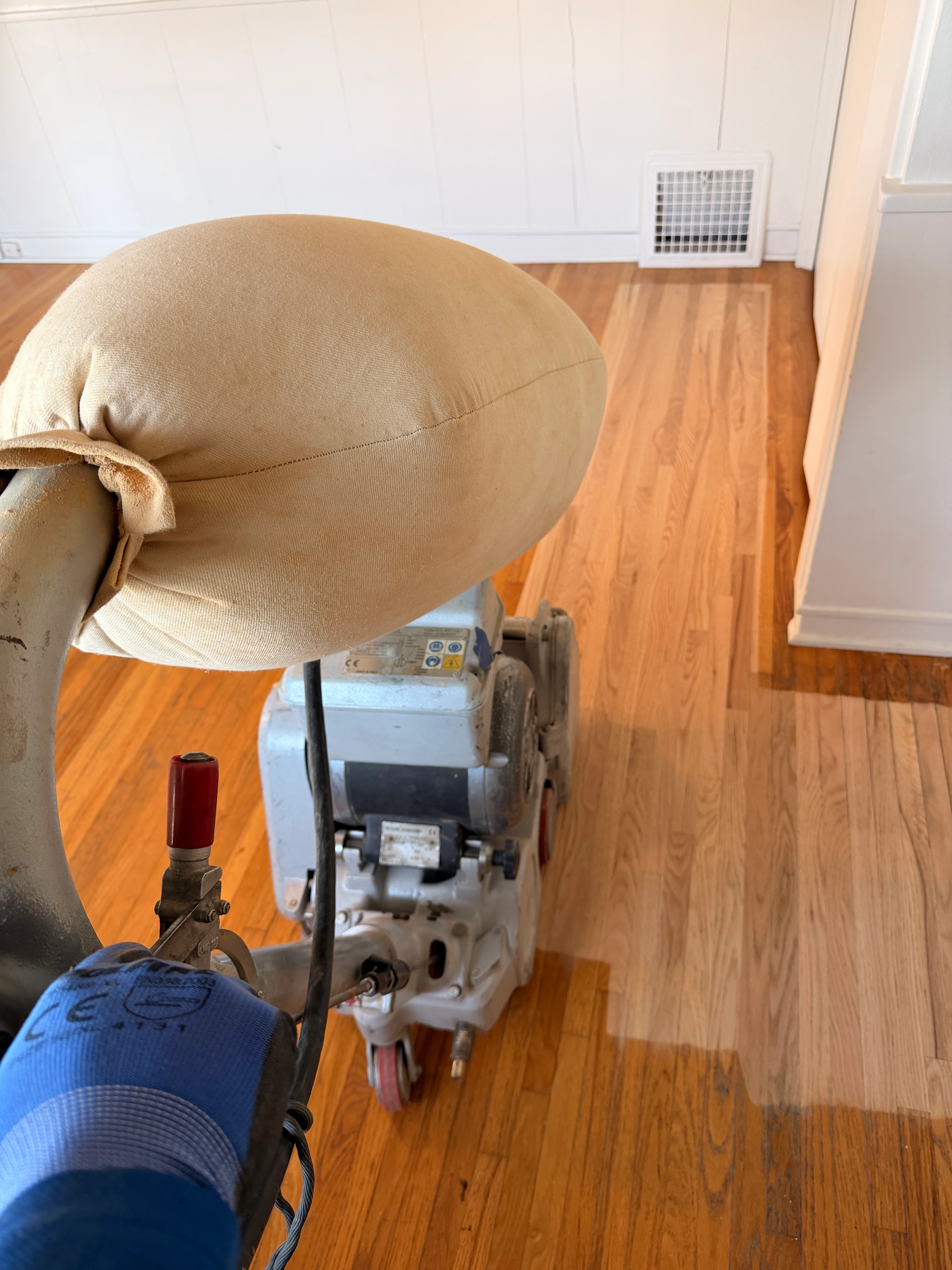
Refinishing is almost always the best money you can spend on a hardwood floor. It brings wood you already own back to life for a fraction of what new flooring costs, and it keeps the character that made the floor worth having. Here is how to know what your Riverside floor actually needs.
Refinish or recoat? They are not the same job
This distinction saves people the most money, and most homeowners have never had it explained.
A full refinish sands the floor down to bare wood, removing the old finish and a thin layer of the wood with it, then rebuilds color and finish from scratch. It is the deep reset, and because it removes wood, a floor can only take so many across its life.
A screen and recoat is far gentler. We lightly abrade the existing finish so a new coat bonds, then lay a fresh protective layer on top. No stain, no sanding to bare wood, no wood removed. It costs a fraction of a full refinish and takes a fraction of the time.
The strategy that keeps floors alive longest is to lean on recoating so that full sanding comes around as rarely as possible.
Which one do you need?
Use the water test. Put a few drops of water on a worn area and watch.
If it beads up, the finish is still doing its job. You may need nothing at all, or a recoat if the sheen has gone dull.
If it soaks in or darkens the wood, the finish has worn through and bare wood is exposed. That means a full sand.
Beyond that test, recoat when the finish looks dull, hazy, or lightly scuffed but the wood itself is not exposed. Go to a full refinish when bare wood shows through, there are deep scratches or dents reaching into the wood, there are gray or water-stained boards, or you want to change the color. Stain only goes onto bare wood, so any color change means a full sand underneath it.
What the process involves
A full refinish in a Riverside home runs in a consistent order. We assess the floor first, checking board thickness and looking for cupping, gaps, deep gouges and pet stains, which confirms there is enough wood left to sand safely.
Then sanding works through the grits in sequence, coarse first to strip the old finish and level the surface, then progressively finer so the wood ends up smooth. Edges and corners are handled separately so the perimeter matches the field.
Dust gets pulled before anything else goes down, because a clean floor is the only way to get a smooth top coat. Our dustless refinishing system captures the great majority of it at the source rather than letting it settle through the house.
If you are changing color, stain goes on next, and we test samples on your actual floor in your actual light. Color shifts dramatically between a showroom chip and your living room, and Riverside light is bright.
Then finish coats go down with buffing between them, and the floor cures. Light foot traffic is usually fine within a day; heavy furniture and rugs should wait several days.
Older Riverside floors are worth saving
The Wood Streets and the older neighborhoods around downtown have pre-1950 homes with Douglas fir and old-growth oak that is genuinely better material than anything in commercial supply today. Tighter grain, denser, cut from bigger timber.
If a floor like that is structurally sound, refinishing it is both cheaper and better than replacing it, and once that wood is gone it cannot be bought back.
Not sure which you need?
The line between a recoat and a full refinish is easy to misjudge from a photo. A quick look in person settles it, and it is the difference between a one-day job and a multi-day one.
Frequently asked questions
- What is the difference between refinishing and recoating?
- Refinishing sands the floor to bare wood and rebuilds the color and finish, removing a thin layer of wood in the process. A screen and recoat lightly abrades the existing finish and adds a fresh protective coat without sanding to bare wood. Recoating costs a fraction as much and is far gentler.
- How do I know if my floor needs refinishing?
- Try a water test. Put a few drops on a worn spot. If it beads up, the finish is still protecting the wood and a recoat may be all you need. If it soaks in or darkens the wood, the finish has worn through to bare wood and a full sand is required.
- Can you change the color of my floor without a full sand?
- No. Stain has to soak into bare wood, so it cannot go over an existing finish and last. Any color change means sanding the old finish off first, which is why staining is always part of a full refinish rather than a standalone service.
- How long before I can use the room?
- Light foot traffic is typically fine within a day of the final coat. Heavy furniture and rugs should wait several days so the finish can cure fully, since putting weight and covering on an uncured finish is how new floors pick up marks in their first week.