The Best Kitchen Flooring Options (and What We Don't Recommend)
Three things kill kitchen flooring early: water, heat under appliances, and dropped pans. Here's how the major options handle each.
The ranked list for kitchens
1. Tile (porcelain or natural stone). Waterproof, scratch-proof, will outlast the house. Cold underfoot in winter. Hard on dropped glassware. Hard on legs over hours of cooking. Best when paired with anti-fatigue mats at the sink and stove.
2. Luxury Vinyl Plank. Our most-recommended kitchen floor today. Fully waterproof, comfortable underfoot, easy to clean, forgiving with dropped pots. Looks like wood, costs less, takes water like a champ.
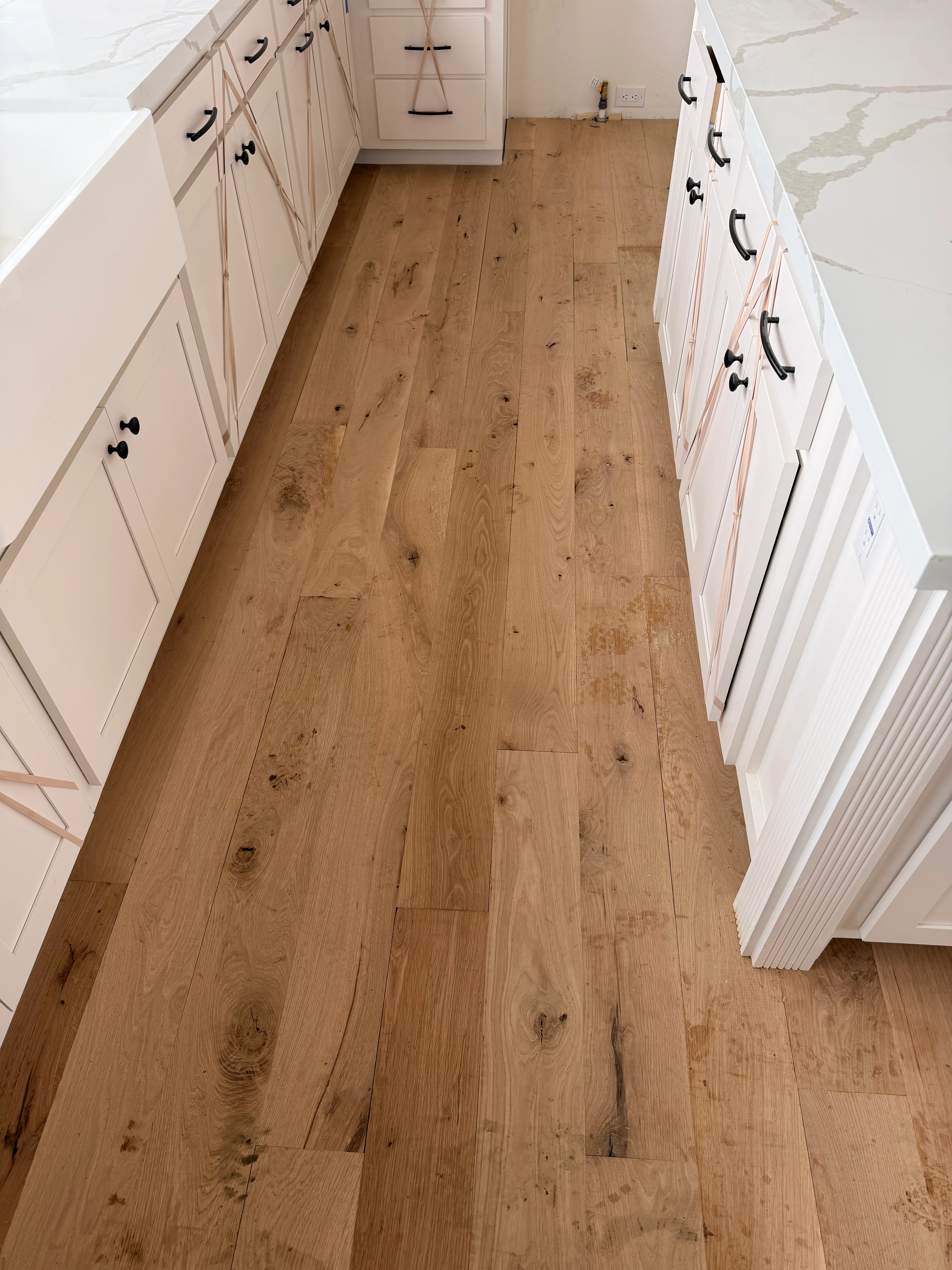
3. Engineered hardwood. Workable in dry-style kitchens (no dishwasher leaks, careful cooks). Risky in busy family kitchens. We do install hardwood in kitchens regularly - owners just need to know the tradeoffs.
4. Solid hardwood. Same caveats as engineered, with even less moisture tolerance. Beautiful in formal kitchens; not our default recommendation.
5. Quality laminate. Water-resistant cores can work; standard laminate is risky in a kitchen with frequent spills. We'd steer to LVP at this tier.
6. Vinyl sheet (older style). Affordable but seams fail and the look is dated. Replaced almost universally now by LVP.
What kitchens demand
- True waterproof at the dishwasher and sink areas. Dishwasher leaks happen - sometimes once in the appliance's lifespan, sometimes more. The flooring around it has to handle a slow drip.
- Heat tolerance under the oven and dishwasher. LVP and hardwood near appliances need temperature stability. Quality LVP is rated for the temps; cheap LVP can warp.
- Forgiveness for dropped pans. Tile cracks. LVP and hardwood dent but recover (LVP) or refinish out (hardwood).
- Easy cleaning. Spilled olive oil, splashed sauce, dropped flour - wipes off all the recommended options. Texture matters: deep wood-grain LVP can hold food residue; smoother textures clean faster.
Mixed flooring strategies
- Hardwood in kitchen + tile at sink. Decorative tile inset around the sink area, hardwood elsewhere. Looks intentional and protects the wettest zone.
- LVP throughout kitchen + family area. Same flooring continuous from kitchen into living/family room. Modern look, easy install, no transition wear point.
- Tile in kitchen + hardwood elsewhere. Classic and effective; transition strip at the doorway.
Common mistakes
- Hardwood directly under the dishwasher. Even careful homes get dishwasher leaks. We'd skip the hardwood there.
- High-gloss anything. Shows every smudge, fingerprint, and grease spot. Matte or satin only in kitchens.
- Dark colors near a busy stove. Spatter shows.
- Skipping the moisture barrier on slab kitchens. Concrete slabs can wick moisture; barrier is non-negotiable.
If you're planning a kitchen flooring project, we'll come out with samples and walk through what fits your kitchen, your budget, and your tolerance for the trade-offs.