
Screen and Recoat vs. Full Refinish: Which One Do Your Floors Need?
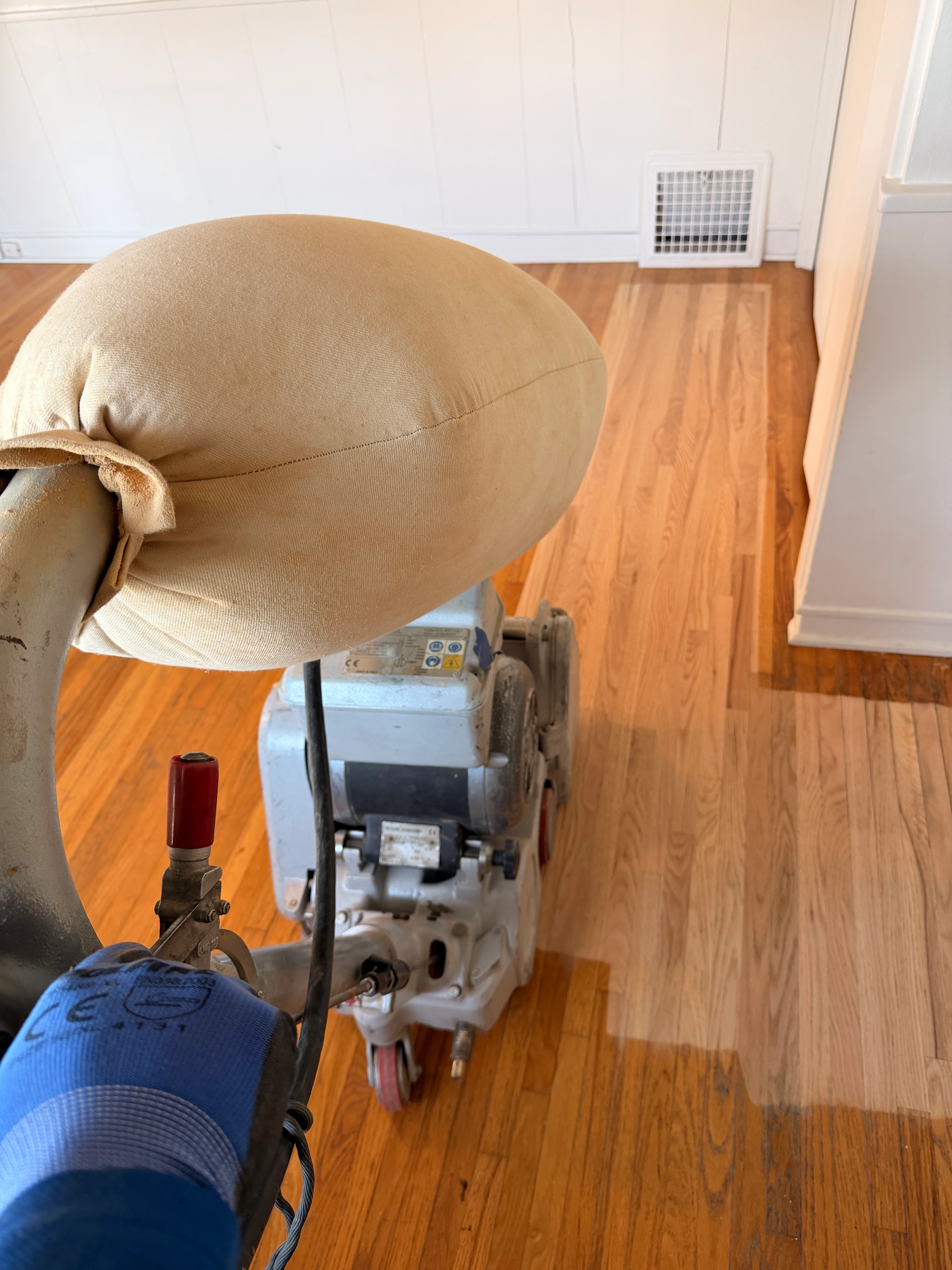
There are two very different jobs that both get called "refinishing," and they differ by about a week of your life and a large multiple in price.
Homeowners routinely book the expensive one when the cheap one would have done it. Here is how to tell them apart before you call anyone.
What each one actually is
Screen and recoat (also called a buff and coat). A machine with an abrasive screen lightly scuffs the existing finish, just enough to give a new coat something to grip. The floor is cleaned, and one or two fresh coats of finish go on top.
Nothing is sanded off. The wood is never exposed. You are renewing the protective coating, not the floor.
- Usually one day
- Minimal dust and no bare-wood stage
- Cannot change the stain colour
- Can change the sheen, matte, satin, or semi-gloss
Full sand and refinish. Drum and edge sanders take the floor down through the old finish to bare wood, in progressively finer passes. Then optional stain, then multiple coats of finish, each needing cure time before the next.
- Three to five days for a main living area
- Removes scratches, gouges, stains, and sun fading that live in the wood
- Lets you change the colour completely
- Uses up a portion of the floor's finite sanding life
Our dustless refinishing guide covers how we contain the dust on full sands, and the sand and stain guide walks the full process.
The test that decides it
Put a few drops of water on the floor in a high-traffic area, in front of the sink, in the main walkway, not in a corner. Wait ten minutes.
The water beads and sits on the surface. The finish is intact. The wood is protected. Whatever you are unhappy about is on top of the finish, which means a screen and recoat is very likely enough.
The water soaks in and darkens the wood. The finish is worn through. Water is reaching bare wood, and so is everything else. This floor needs a full sand.
Do it in two or three spots, because floors wear unevenly. A hallway can be worn through while the bedroom next to it is untouched, and that is a completely reasonable reason to do different rooms differently.
What each one can and cannot fix
A screen and recoat handles:
- A dull, tired-looking surface
- Fine surface scratches, including light pet-nail scuffing
- A finish that has lost its protection but not failed
- Changing sheen, this is the big one, and it is why a large share of our recoats happen. Homeowners who are done with a glossy 2000s finish and want matte can get there in a day.
A screen and recoat will not touch:
- Deep scratches or gouges that reach the wood
- Stains, pet urine, or water marks in the wood itself
- Sun fading and the pale rectangles where rugs sat
- Colour changes of any kind
- Cupped, crowned, or uneven boards
- Peeling or flaking finish, if the existing coating is failing, adding another coat on top of it fails too
That last one matters. A recoat bonds to the old finish. If the old finish is not bonded to the floor, you are stacking coatings on a bad foundation.
The waxed-floor exception
If your floor has ever been waxed, or treated with an oil soap product, a recoat will not stick. Polyurethane does not bond to wax, it beads, peels, and fails within months.
Test it: rub a small hidden area with fine steel wool and mineral spirits. A grey or waxy residue on the wool means wax. Older floors around the Inland Empire, particularly pre-1970 homes, are the usual candidates. A waxed floor can still be recoated, but only after full wax removal, and often a full sand is the more reliable route.
The economics, and the argument for recoating on a schedule
A screen and recoat costs a fraction of a full sand and takes a fraction of the time. But the real argument is longer-term.
Every full sand removes wood. Solid 3/4-inch hardwood has roughly four to seven sandings in it over its whole life, and then it is done. Engineered hardwood has one or two, depending on its wear layer.
A floor that gets recoated every five to seven years, before the finish wears through, may never need a full sand at all. The finish gets renewed before wear reaches the wood, so the sanding budget is never spent.
That is the case for treating recoating as maintenance rather than repair. It is the cheapest thing you can do for a hardwood floor and the one that most extends its life. Our post on how long hardwood floors last puts numbers on it.
When a full sand is clearly the right call
- The water test soaks in across the main living areas
- You want a different colour
- There are gouges, pet stains, or water marks in the wood
- Sun fading has left obvious tonal differences
- The finish is peeling, flaking, or cloudy
- You are opening up a floor after removing walls or carpet and need everything to match
And a third possibility worth naming: sometimes the honest answer is that the floor should be replaced rather than refinished at all. Our post on refinishing versus replacing covers how to tell.
Not sure which camp your floors are in? Book a free in-home look. We will do the water test, check the wear layer, and quote whichever job you actually need, including the cheap one.
Frequently asked questions
- What is the difference between a screen and recoat and a full refinish?
- A screen and recoat lightly abrades the existing finish and adds fresh coats on top, taking about a day and never exposing bare wood. A full refinish sands the floor down to bare wood, taking three to five days, and can remove scratches, stains, and fading and change the colour.
- How do I know if my floors just need a recoat?
- Put a few drops of water on the floor in a high-traffic spot and wait ten minutes. If the water beads on the surface, the finish is intact and a screen and recoat is likely enough. If it soaks in and darkens the wood, the finish is worn through and the floor needs a full sand.
- How often should hardwood floors be recoated?
- Every five to seven years in a normal household, before the finish wears through to the wood. A floor kept on that schedule may never need a full sand at all, which preserves its limited sanding life and can extend the floor’s usable lifespan by decades.
- Can a screen and recoat change the colour of my floor?
- No. Colour lives in the stain, which is under the finish, so changing it requires sanding to bare wood. A recoat can change the sheen, from gloss to satin or matte, which is one of the most common reasons homeowners book one.